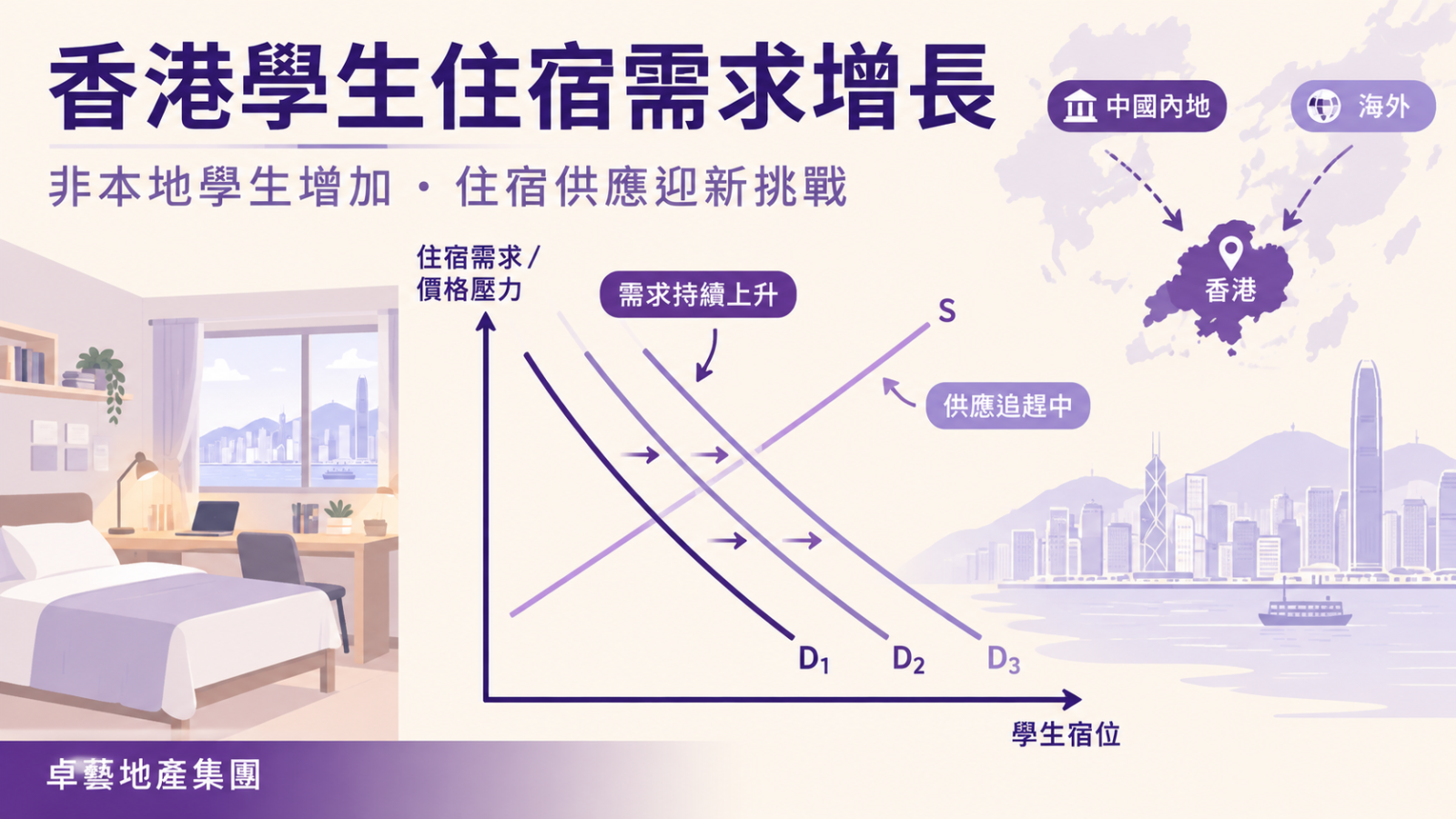
Hong Kong’s higher education sector has again attracted international attention. On 30 September 2026, the Education Bureau reported that five Hong Kong universities were placed among the world’s top 100 in the Times Higher Education (THE) World University Rankings 2027. For prospective students, the rankings offer a starting point for exploring universities. Once a student decides to study in Hong Kong, accommodation, commuting and everyday living arrangements deserve attention too.
Which five universities are in the global top 100?
| University | THE World University Rankings 2027 |
|---|---|
| The University of Hong Kong (HKU) | 33rd |
| The Chinese University of Hong Kong (CUHK) | 42nd |
| The Hong Kong University of Science and Technology (HKUST) | 58th |
| City University of Hong Kong (CityUHK) | 70th |
| The Hong Kong Polytechnic University (PolyU) | 79th |
These are positions in the THE 2027 rankings, not the QS rankings. Ranking organisations use different methodologies, so their positions should not be mixed. An institution’s overall position also does not mean that every programme has identical strengths.
What can rankings tell prospective students?
Having several highly ranked universities in one city gives prospective students a range of institutions and subjects to explore. Rankings can help them identify universities with an international profile, but they should not be the only factor in a study decision.
Before accepting an offer, compare programme content, teaching language, entry requirements, tuition and scholarships, practical experience and personal career goals. The location of classes, laboratories or placements also matters: it can influence where a student chooses to live and how much time they spend commuting.
Why plan accommodation early?
A university’s ranking does not determine whether an individual student will receive a hostel place. Students should check their own institution’s eligibility rules, application deadlines and allocation results rather than assume that on-campus accommodation is guaranteed.
If off-campus housing is needed, set three practical criteria early: an affordable total monthly cost, an acceptable door-to-door commute and the intended move-in and move-out dates. Testing the journey to the actual teaching location is more useful than relying only on a property’s distance from a university on a map.
Comparing campus and off-campus housing
- On-campus hostels: Confirm eligibility, charges, the accommodation period and renewal rules with the university.
- Shared off-campus housing: Check the room and common areas, number of residents, how costs are shared and each tenant’s responsibilities.
- Whole-unit rentals: Check the total rent, permitted occupants, deposit and additional charges before agreeing how to share costs with housemates.
Whichever option you choose, compare more than the headline rent. Utilities, internet and transport can change the overall cost. Before signing, review the tenancy period, termination conditions, maintenance responsibilities and emergency contact arrangements.
How can Cheuk Ngai Group support incoming students?
According to its website, Cheuk Ngai Group offers student accommodation in areas including Sai Ying Pun, Sheung Wan, North Point, Prince Edward and Tai Wai. It describes both whole-unit and shared rental options, with a dedicated one-to-one butler for each unit. Its website also presents accommodation services for university and postgraduate students, exchange students and short-term visitors.
These options give students who cannot secure an on-campus place, or who prefer to compare off-campus living, a way to enquire according to campus location, budget and move-in date. A useful enquiry should include the actual teaching campus, an acceptable commute, whether sharing is suitable and the expected tenancy period. Students should then ask for the address, photographs, full charges and terms of properties currently available.
Cheuk Ngai provides private-market student accommodation. Mentioning university rankings in this article does not imply an official partnership with, or endorsement by, any of the five universities. Property availability, the scope of butler services and tenancy arrangements must be confirmed against current information and the formal agreement.
Three steps before moving to Hong Kong
- Compare programmes, not just rankings: review course content, total study costs and teaching locations.
- After receiving an offer, check university hostel arrangements and prepare an off-campus alternative if needed.
- When enquiring about housing, provide your institution, campus, budget, move-in date and number of occupants, then compare actual properties and contracts.
Five Hong Kong universities in THE’s global top 100 provide a strong starting point for exploring study in the city. A good experience, however, also depends on choosing the right programme and a suitable place to live. To explore off-campus options, visit Cheuk Ngai Group’s student housing page and enquire about current availability and terms.